





The Cash-Out Flow Players Expect In 2026
Imagine you finish a session, your balance updates, and you want to move funds out without guessing what happens next. A modern cash-out is usually a simple pipeline: you submit the request, the account is checked, then the payment method processes the transfer.
In 2026, most delays come from predictable triggers: incomplete verification, mismatched account details, or an active promotion that still affects the balance. If you treat the payout as a short workflow instead of a single button, you can prevent the “stuck on pending” feeling before it starts.
Because the platform is presented as available in Australia for eligible adult players, it typically uses identity checks and responsible play controls that align with common industry practice. You do not need to lean on unverified licensing claims to feel safe - you need clear steps, consistent data, and realistic expectations about processing stages.
Account Prep That Prevents Holds
Picture a player who changes their address today, adds a new payout method tonight, and requests funds immediately after. That sequence often invites extra scrutiny, even if everything is legitimate. The easiest win is stability: set things up first, then keep them unchanged while the request runs.
Start with three quick checks inside your account: profile accuracy, promotion status, and payment method readiness. If one of these is messy, fix it now and give it time to “settle” before you request money out.
Make Your Profile Match Your Documents
Suppose you registered fast and used a shortened name, or one letter is off in your surname. Deposits may still work, but cash-outs often compare your profile to verification documents and to the payment method holder. Small mismatches can lead to repeated questions.
Do a one-time clean-up: confirm your full name, date of birth, and address format. Then stop editing them mid-process. If you must update something important, do it well before requesting a payout and avoid additional changes until the transfer is completed.
Check Promotions And Balance Locks Before You Request
Imagine you accepted a bonus, played a mix of games, and now want to withdraw everything you see. Many systems split the balance behind the scenes, so part of it can be restricted until promo conditions are resolved. That can look like a delay, but it is usually just a rules conflict.
Before you submit, open the promotions section and look for anything active or incomplete. Choose one clean route: finish the conditions, or forfeit the promo benefit so the withdrawable cash portion becomes clearer. Players who decide early avoid the back-and-forth later.
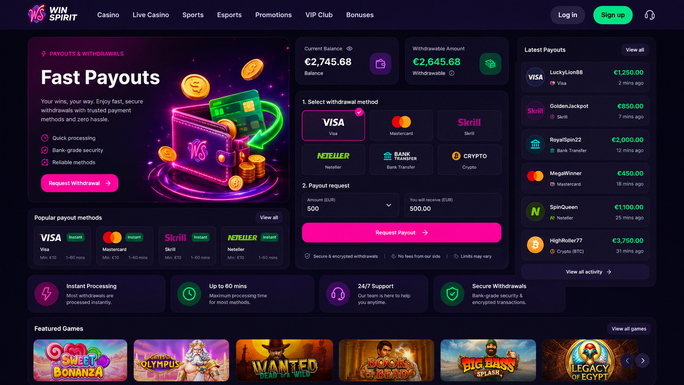
Winspirit Withdrawal Status And Timing
Imagine you submit a request and the status changes to pending, then you start refreshing every minute. The status is usually telling you where the request is: first the platform review, then the provider processing. Knowing which stage you are in stops guesswork.
Think in two labels: approved and received. Approved generally means the platform released the payout from its side. Received means your bank or provider credited it. If you talk to support, this distinction helps them check the right system quickly.
One more scenario: you see “pending,” get nervous, and immediately change your payout method to “speed things up.” That often backfires, because the system now has to re-check a different destination and may restart the review clock. A better rhythm is simple: check status a few times per day, keep your device and account details steady, and act only when the cashier asks for action or gives a clear rejection reason.
Platform Review: What Gets Checked
Picture it as a short checklist running in the background: identity status, profile consistency, promotion flags, and payment method match. If you are verified and your details have been stable, this step is often quiet. If something changed recently, the request may pause for extra confirmation.
Avoid the common mistake of canceling and resubmitting. One clean request is easier to process than a stack of duplicates, and repeated submissions can look unusual. Instead, keep the request active and respond only if you see an explicit prompt.
Provider Processing: Why “Completed” Is Not Always Instant
Suppose your request shows completed, but the funds are not visible yet in your bank or wallet. At that point, the method provider may still be processing the transfer, often in cycles or within internal review windows. This is normal and can vary by method type and timing.
A practical habit is to check the destination account directly and note timestamps. If a reasonable window passes after completion, contact support with the completion time and method type so they can trace the outgoing transaction, not just the request status.
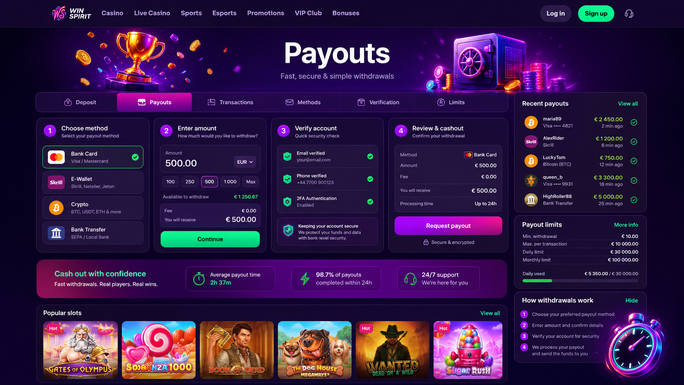
Choosing A Payout Method In Australia With Less Friction
Imagine you choose a payout method because it sounds fastest, then you discover it needs extra setup or it cannot receive funds the way you expected. The “best” method is usually the one that matches your deposit history and is easiest to prove ownership for.
As a rule of thumb, keep deposits and payouts aligned. If you deposit through one type of method and try to withdraw through a totally different type, you may be asked to confirm the change. Consistency reduces questions, and fewer questions usually means smoother processing.
Here’s a practical comparison to help you choose without overpromising exact speeds:
Type of Method | What Players Like About It | What Often Causes Delays | What To Prepare |
|---|---|---|---|
Bank transfer | Direct arrival to a bank account | Incorrect details, bank cycles | Accurate account details, matching name |
Card route | Familiar and simple setup | Ownership checks, method rules | Card ownership confirmation if asked |
Wallet-style option | Keeps funds separated | Identifier mismatch, extra verification | Wallet in your name, consistent email/ID |
Digital asset transfer | More self-managed control | Security checks, address mistakes | Careful address checks, clear ownership |
Imagine you are explaining your choice to support in one sentence. If you cannot explain it clearly, pick a simpler method. Clarity is often the hidden speed advantage.
Fixing Problems Fast When Something Goes Wrong
Picture the moment you realize the request is not moving and you feel the urge to try everything at once. That usually makes it worse. Fast troubleshooting is calm troubleshooting: identify the pattern, apply the matching fix, then wait for the system to update.
Keep your own mini-log: request time, status changes, and any prompt text. When you contact support, you sound prepared, and prepared players usually get faster, more specific answers.
Verification Loops: How To Stop Repeating Uploads
Imagine you upload documents, get a “received” message, then the system asks again days later. Most often the images were unclear, cropped, expired, or did not match the profile details. Uploading more random files rarely helps.
Make one high-quality submission: good lighting, all corners visible, no glare, sharp text. If it is proof of address, ensure your name and address appear together in one view. Then do not edit your profile details until the payout finishes, because changes can trigger a new review.
Rejections, Reversals, And Limits: The Practical Response
Suppose your request is rejected and you assume the platform is broken. Rejections are often specific: wrong destination details, method not eligible to receive, or a promotion conflict. Read the reason field, fix one issue, then submit one new request.
A reversal usually means the transfer was attempted but returned. Ask support whether the payment was released and then bounced back, or paused before release. If the issue is limits or minimums, choose a method that fits your typical cash-out size and keep it verified, so you are not switching paths under stress.

Support And Self-Control Tools That Keep Things Predictable
Imagine you need help and you send a message that only says “it’s stuck.” Support often cannot act on that. They can act on a clear summary: request time, method type, and current status text. The clearer you are, the faster the reply turns into a solution.
Responsible play tools matter here too. When players set limits and take breaks, activity becomes more consistent, and consistent activity is less likely to trigger security checks during payouts.
How To Message Support So They Can Trace Your Request
Suppose you want an answer that is not generic. Send one compact message: “Requested payout at [time], method type [X], status shows [Y], no prompts displayed.” Then ask direct questions: is it approved on your side, or still under review? Was it released to the provider, or paused for verification?
Keep the conversation in one thread and avoid sending the same request across multiple channels. If you update your details while waiting, tell support, because it can explain why checks restarted.
Limits, Timeouts, And Self-Exclusion For Adult Players
Imagine you notice you are playing longer than planned and you want a clean pause without drama. Timeouts and limits can lock access for a period or cap deposits so you do not chase outcomes. The goal is control, not punishment.
If you need a longer break, self-exclusion is a structured option that blocks access for a chosen period. Many players set it during a calm moment, because it is easier to choose sensible boundaries when you are not reacting to a stressful session.